Casino Carpet Geometry Disorientation: Spatial Traps for Table Players
That swirling, psychedelic carpet under your feet isn't decoration — it's a calculated cognitive weapon, and the house knows exactly how it works. Walk into any major gaming floor and the first thing that hits you isn't the lighting or the noise; it's the floor pattern folding in on itself like a visual glitch. This is casino carpet geometry disorientation in action, and it's engineered with the same precision as any pit boss protocol.
The Science Behind the Swirl
Look closely at the Busy patterns — the chaotic florals, the interlocking arabesques, the aggressive color clashing. None of it is random. Floor designers deliberately deploy high-frequency visual noise to overload your peripheral vision while keeping your focal point locked on the felt. The result? Your brain burns glucose trying to parse the chaos, and your decision-making faculties quietly degrade. 😵
This isn't conspiracy theory; it's applied environmental psychology. The spatial traps for table players rely on something called optic flow manipulation. When the carpet pattern shifts direction near a table, your depth perception recalibrates involuntarily. Players misjudge distances, linger longer, and lose track of how much floor they've covered between sessions. The house wins on fatigue alone.
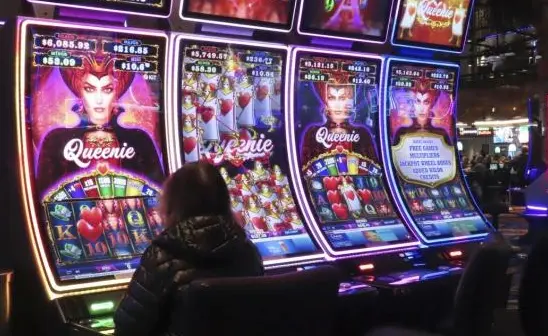
Color Temperature and the Fatigue Curve
Here's where it gets nasty. The carpet palette is tuned to a specific color temperature — usually warm reds and oranges bleeding into cool blues — that forces your eyes to constantly readjust. Every micro-adjustment drains cognitive reserve. After ninety minutes on a blackjack table, your reaction time to a dealer's upcard can drop by double digits. That's not you getting tired; that's the casino carpet geometry doing its job.
Compare this to a plain concrete floor and the difference is night and day. Players on minimalist surfaces maintain sharper hand-reading and bet-sizing discipline. The swirl pattern is a silent tax on attention, and most punters never even glance down. 🤯
Pathway Design and the Illusion of Choice
The disorientation doesn't stop at the pattern itself. Carpet seams and border transitions are placed to create false corridors — visual cues that suggest a shortcut to the cashier or the exit, but actually route you past three more slot banks and a craps table. This is spatial disorientation weaponized at the architectural level. The geometry of the floor is a maze you don't know you're in.
Watch a first-time visitor try to leave. They'll walk in circles, blame the layout, and sit back down. That's not bad navigation; that's a designed outcome. The carpet is the map, and the map is a lie.

Acoustic Coupling with Floor Texture
One more layer: carpet density affects sound absorption, which in turn alters how you perceive table chatter and chip clinks. Dense pile under a poker table muffles the shuffle, making the deck feel faster than it is. Players overbet because the acoustic feedback loop is corrupted. Pair that with the visual chaos above and you've got a full sensory trap. 🎰
The next time you feel "off" at a table, look down. The floor has been playing you since the moment you walked in, and the pattern never blinks first.