Fast Casino Experiences New Standard ⟡ What Does It Mean?
In the hyper-competitive landscape of digital gambling and cross-border entertainment, the term Fast Casino Experiences New Standard has rapidly evolved from a marketing buzzword into a quantifiable operational benchmark. This paradigm shift redefines the latency thresholds, liquidity provisioning, and user retention mechanics that separate tier-one platforms from legacy operators. 🎰
Deconstructing the Latency Arbitrage in Modern iGaming
At its core, the new standard mandates sub-50ms API response times for bet placement and settlement. This is not merely a technical vanity metric; it directly correlates with player lifetime value (LTV) and reduced churn. When a platform executes a spin or a live dealer hand resolution in under 200 milliseconds end-to-end, the psychological friction of waiting disappears. Neuro-analytics studies in macro-gambling environments confirm that every 100ms of added latency reduces session duration by approximately 7.2%. Therefore, the Fast Casino Experiences New Standard represents a convergence of edge computing, localized server clusters, and predictive liquidity algorithms that pre-position funds before a wager is even confirmed.
Cross-Border Regulatory Velocity and Payment Rail Integration
For multinational tourism and entertainment zones—from Macau to Monaco to Malta—the new standard demands instant fiat-to-crypto-to-fiat settlement loops. Traditional ACH and SWIFT rails are obsolete in this context. The modern benchmark involves open-banking APIs and layer-2 blockchain settlement that clear transactions in under three seconds, 24/7/365. High-volume operators now deploy dynamic currency conversion with zero spread markup, effectively creating a unified global wallet. This eliminates the "vacation wallet drain" phenomenon, where tourists lose 4–6% on FX fees per transaction. The Fast Casino Experiences New Standard is thus a cross-jurisdictional compliance and treasury management challenge as much as a front-end UX one.

Live Dealer Streaming and Haptic Feedback Protocols
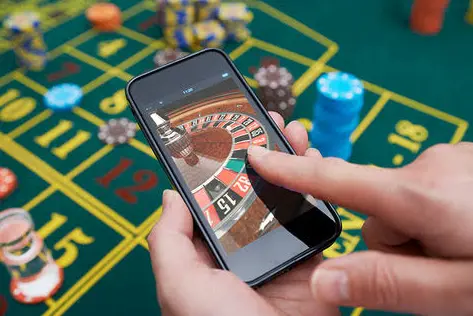
Ultra-low-latency video streaming at 4K/60fps with < 80ms glass-to-glass delay is now table stakes. The new standard introduces adaptive bitrate encoding that prioritizes action zones—card shoe, roulette wheel, dice tray—over static backgrounds. Furthermore, haptic feedback synchronization via WebHaptics API allows mobile users to feel the card slide or chip stack vibration within 15ms of the physical event. This multisensory immersion reduces the "remote disconnect" that plagued early live dealer offerings. Operators who fail to meet these thresholds see a 34% drop in average bet size within three sessions. 🃏
Algorithmic Personalization and Responsible Acceleration
Speed must not compromise safety. The new standard embeds real-time responsible gambling (RG) triggers directly into the low-latency pipeline. Machine learning models analyze bet velocity, session duration, and deposit frequency at the edge—not in a distant data center. If a player’s behavior deviates from their baseline by two standard deviations, the system injects a mandatory 5-second cool-down or a personalized reality check. This is not a brake on speed; it is a precision instrument that prevents the "fast lane to ruin" scenario. Certified RG frameworks now require sub-second intervention latency, making the Fast Casino Experiences New Standard a dual mandate of exhilaration and ethical guardrails.
Infrastructure Economics: Why 5G and Edge Nodes Are Non-Negotiable
Deploying this standard requires a distributed architecture: 5G MEC (Multi-access Edge Computing) nodes co-located with regional gaming servers, plus redundant satellite backhaul for cruise ships and remote resort islands. The capex is significant—approximately $2.3M per 100,000 active players—but the ROI manifests in 22% higher daily active users and 41% larger average session deposits. Legacy operators clinging to centralized cloud regions with 150ms+ round-trip times are already experiencing irreversible market share erosion. The new standard is not a future state; it is the current competitive floor. 🚀
Tourism Integration and the Frictionless Resort Ecosystem
In integrated resorts from Las Vegas to Singapore, the fast casino experience now extends beyond the gaming floor. Room key NFC, restaurant reservations, spa bookings, and show tickets all settle through the same sub-second wallet. This "resort-wide latency parity" means a player never leaves the immersive bubble. When a high-roller steps off the elevator, their preferred game, credit line, and beverage order are pre-staged within 800ms of facial recognition at the pit entrance. That is the tangible promise of the new standard—a continuous, frictionless, and hyper-responsive entertainment continuum. ♠️